 Skip to main content Skip to footer

Woven wood shades are popular for their natural texture, warm appearance, and flexible light-control options. However, one question often comes up when customers are planning a new window treatment:
Why do woven wood shades have light gaps, and how can they be reduced?
Some amount of light around the edges of a shade can be normal, especially with an inside mount. The amount of visible light depends on the window opening, shade dimensions, mounting method, fabric construction, and lining.
The good news is that proper measurement, mounting selection, and product configuration can help reduce light gaps in woven wood shades.
What Are Light Gaps?
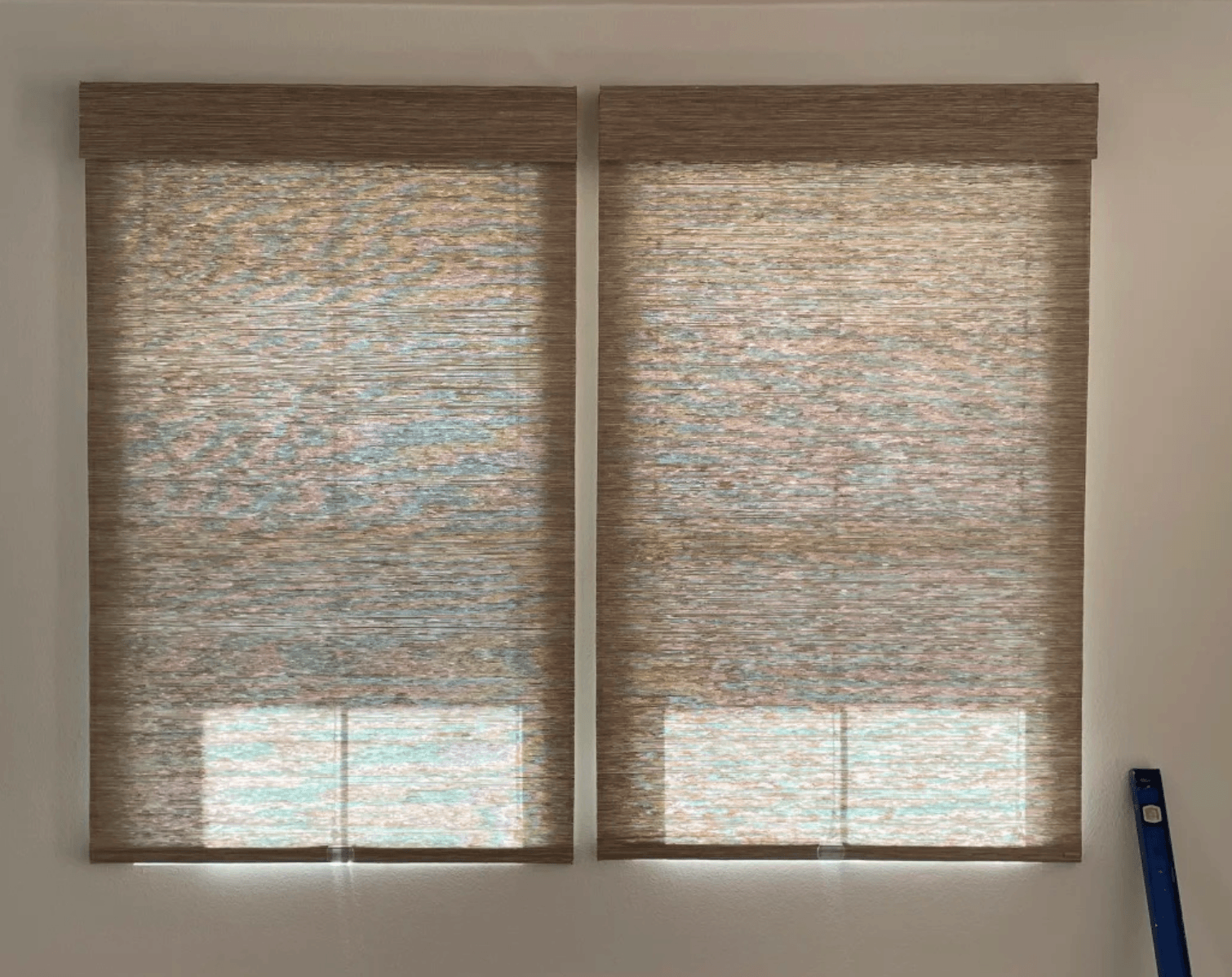
A light gap is the small area around the edge of a shade where sunlight can still enter.
With an inside-mounted shade, the shade sits inside the window opening rather than covering the entire wall around the window. Because the finished shade needs to fit within the opening, a small amount of space may remain around the edges.
Light can also appear between two or more shades when a large window is divided into multiple sections.
It is important to understand that light gaps are not always caused by a product defect. In many cases, they are related to the way the shade is mounted and how the opening is measured.
Why Do Light Gaps Occur?

Several factors can contribute to visible light gaps.
1. Inside Mount
An inside mount shade is installed inside the window frame or opening.
This creates a clean, built-in appearance, but the shade cannot completely cover the entire opening. Some space may remain at the sides or top so that the shade can operate properly.
For customers who want the most built-in look, inside mount can be an attractive choice. However, customers should also understand that some edge light may remain.
2. Outside Mount
An outside mount shade is installed above or outside the window opening.
Because the shade can extend beyond the opening, it can provide greater coverage around the edges and may help reduce light gaps.
This can be particularly useful for bedrooms, media rooms, and other spaces where stronger light control is important.
However, the final coverage still depends on the shade size and installation position.
3. Measurement
Accurate measurements are one of the most important factors when ordering custom woven wood shades.
If the window opening or finished shade dimensions are not clearly communicated, the final product may not provide the coverage the customer expects.
Before ordering, make sure the manufacturer knows:
- Window opening width
- Window opening height
- Inside or outside mount
- Desired finished shade size
- Number of shades
- Lining requirements
- Any special installation conditions
For multiple shades, each section should be measured separately rather than assuming every section is exactly the same.
Does the Woven Fabric Affect Light Gaps?

Yes, but it is important to distinguish between light passing through the fabric and light coming around the edges.
These are two different issues.
Natural woven materials can have different levels of openness. Some fabrics allow more daylight to pass through the weave, while others provide a more closed appearance.
This means a shade can have minimal edge gaps but still allow light to pass through the woven material itself.
If the customer wants stronger light reduction, the choice of fabric and liner becomes important.
Can a Liner Reduce Light?

A liner can significantly change the light-control performance of a woven wood shade.
No Liner
Without a liner, the natural weave and texture remain highly visible.
This option is often preferred when customers want a softer, more natural appearance and are comfortable with more natural light entering the room.
Light-Filtering Liner
A light-filtering liner can reduce the amount of sunlight passing through the woven material while still allowing some daylight to enter.
This is a popular option for living rooms, dining rooms, and other spaces where customers want light control without making the room completely dark.
Blackout Liner
A blackout liner provides stronger light reduction and can also improve privacy.
It may be suitable for bedrooms, nurseries, media rooms, and other areas where stronger light control is required.
However, it is important to understand that a blackout liner does not necessarily eliminate all light around the edges of the shade. The liner mainly helps control light passing through the shade itself.
For this reason, the mounting method remains important.
Inside Mount vs. Outside Mount for Light Control

When reducing light gaps is a major priority, customers should carefully consider the difference between inside mount shades and outside mount shades.
Inside Mount
Advantages include:
- Clean, built-in appearance
- Shade fits within the window opening
- Suitable for many standard window designs
The trade-off is that some light may remain visible around the edges.
Outside Mount
Advantages include:
- Greater coverage around the window
- Potentially fewer visible edge gaps
- Useful when stronger light control is required
Outside mount can be a practical choice when a customer wants the shade to cover more than the actual window opening.
The final decision should consider both appearance and light-control needs.
What About Light Gaps Between Multiple Shades?

Large windows are sometimes divided into two or more shades.
This can make operation easier, but it can also create a vertical gap between adjacent shades.
For projects where multiple shades are necessary, the layout should be planned carefully.
The width of the gap between shades depends on the overall configuration and hardware requirements. The goal should be to balance:
easy operation + proper clearance + overall appearance + light control
Trying to eliminate every possible gap may interfere with normal shade operation.
For this reason, customers should discuss the expected light-control level with the manufacturer before production.
Can Woven Wood Shades Be Completely Blackout?

The answer depends on the entire shade configuration.
The woven fabric itself is not necessarily blackout. Natural woven materials vary in openness and light transmission.
Adding a blackout liner can substantially reduce light passing through the shade, but some light may still enter around the edges depending on the mounting method and window construction.
Customers who require a very dark room should consider the full system rather than looking at the fabric alone.
This includes:
- Fabric openness
- Liner
- Mounting method
- Shade coverage
- Window frame
- Installation position
How Can You Minimize Light Gaps?

If reducing light gaps is important, consider the following steps.
Choose the Right Mounting Method
For stronger light control, an outside mount may provide more coverage around the window.
Measure Carefully
Accurate measurements are essential for custom woven wood shades.
Clearly identify whether the measurements are the actual window opening dimensions or the desired finished shade dimensions.
Choose an Appropriate Liner
A light-filtering or blackout liner can reduce the amount of light passing through the woven material.
Consider Multiple Shade Layouts
For large windows, multiple shades may be necessary. Plan their placement carefully to balance operation and appearance.
Discuss Your Light-Control Expectations
Not every customer has the same definition of “light control.”
One customer may simply want to reduce glare, while another may want a bedroom to be as dark as possible.
Tell the manufacturer how much light control you expect before placing the order.
What Should You Tell Your Manufacturer?

Before ordering woven wood shades with light control, provide as much project information as possible.
A manufacturer should know:
- Exact window dimensions
- Inside or outside mount
- Desired shade size
- Number of shades
- Fabric selection
- Liner selection
- Lift system
- Room application
- Light-control expectations
Photos of the window can also be helpful when the installation condition is unusual.
The more clearly the requirements are communicated before production, the easier it is to recommend the right configuration.
Final Thoughts
Some light around the edges of a woven wood shade can be a normal result of the mounting and installation method, particularly with an inside mount.
However, light gaps in woven wood shades can often be reduced through careful planning.
The key factors are the mounting method, accurate measurements, fabric openness, liner selection, shade configuration, and the customer’s expectations for light control.
For customers who need stronger light reduction, an outside mount combined with an appropriate liner may provide better coverage than an inside-mounted shade.
The important point is to consider the complete window treatment system rather than focusing on the fabric alone.
Looking for Custom Woven Wood Shades?
At The Shire Shades, we provide custom woven wood shades based on your window dimensions, fabric, lift system, lining, and finishing requirements.
Send us your window size and light-control requirements, and we can recommend a suitable configuration and provide a quote.


